
Why Your Central Ohio Home Gets Ice Dams (And What Actually Fixes Them)
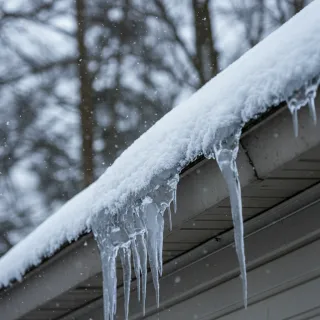
Most people think ice dams are just a winter annoyance. Something you deal with, like scraping your windshield or salting the driveway. But if you've ever had water drip through your ceiling during a January thaw, you know it can get serious fast. Rot, mold, damaged drywall, ruined insulation. The repair bills add up.
Here's the thing most homeowners in Columbus, Delaware, Powell, or anywhere in central Ohio don't realize: ice dams aren't caused by the cold. They're caused by the heat inside your house escaping through the roof. And until you fix that, they'll keep coming back.
What's Actually Happening on Your Roof
An ice dam is a ridge of ice that builds up along the edge of your roof, usually right at the eaves or in valleys. It blocks melting snow from draining off. That trapped water pools behind the dam, and since your shingles are designed to shed water flowing downhill, they can't handle water sitting on them or being pushed upward. Water finds its way under the shingles and into your home.
For an ice dam to form, you need all of these at the same time: freezing temperatures outside, a roof surface that's warmer than freezing higher up, and snow sitting on the roof. Central Ohio checks these boxes plenty of times each winter. We don't get the heavy snowpack of Buffalo or Minneapolis, but we get enough. A solid 4 to 6 inch snowfall followed by a few days in the 20s is textbook ice dam weather here.
Your Attic Is the Problem
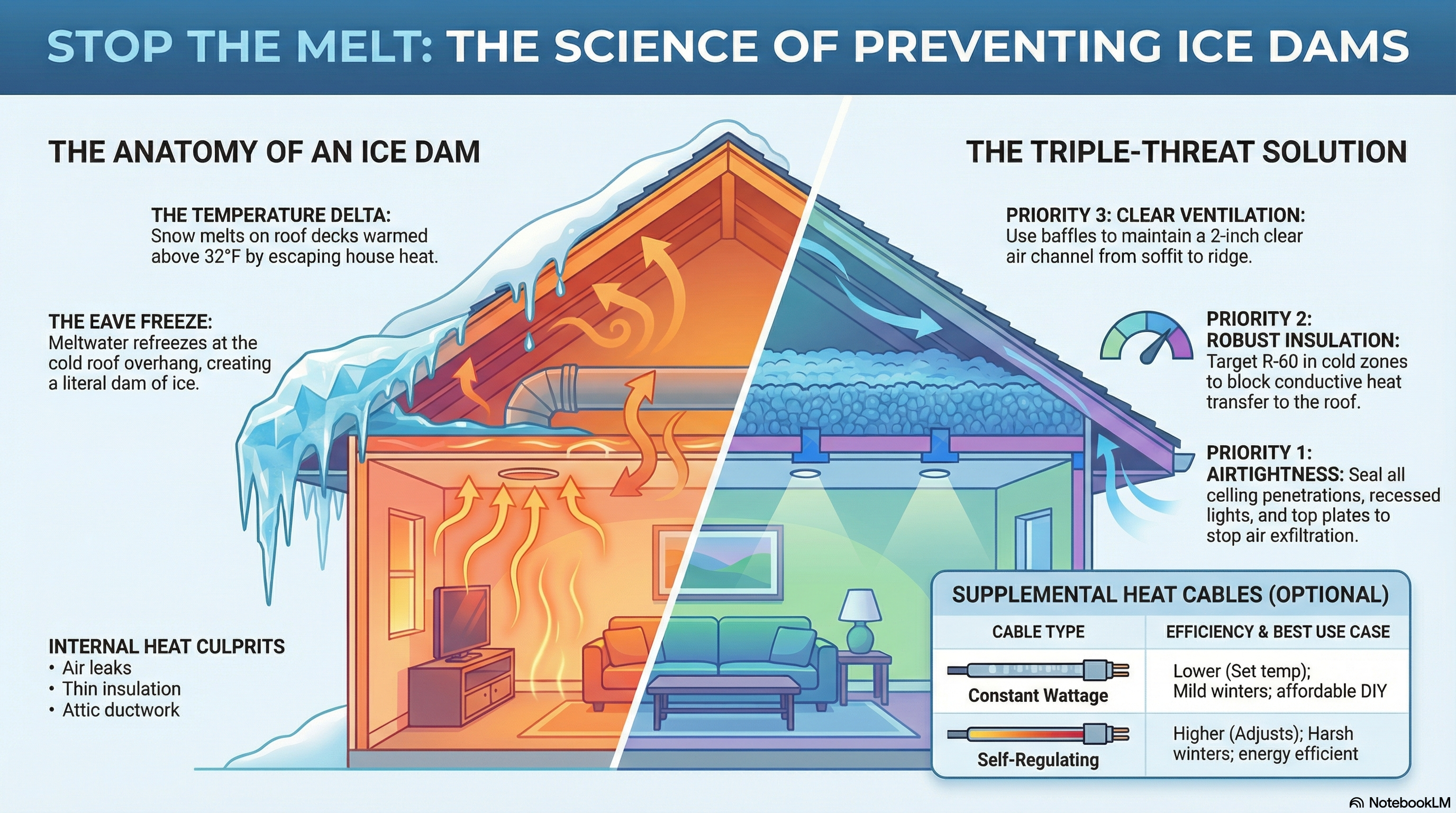
The snow on your roof acts like a blanket. Every inch of snow has roughly the same insulating value as an inch of fiberglass. So a foot of snow on your roof works like a layer of R-12 insulation, trapping the heat that leaks out of your house right against the roof surface. That heat melts the snow from underneath, and the water runs down toward the eaves. But the eaves sit past the edge of your heated living space. They're cold. That water hits the cold zone and refreezes, building up layer by layer into a dam.
The real question is, why is heat getting to the roof in the first place?
Warm Air Leaking Into the Attic
This is the biggest one. Warm air rises, and it finds every crack and gap in your ceiling to escape into the attic. Building scientists call these gaps "attic bypasses," and they include recessed light fixtures, plumbing vent stacks, electrical wire holes, the gaps around chimneys, and unsealed attic hatches. Research shows recessed lights are especially bad. When a bulb is on, it creates a little chimney effect that pulls 3 to 5 times more warm air through the fixture housing than when it's off. That creates hot spots on the roof deck directly above.
In a 33-house study, attics with ice dam problems were about 7°F warmer than attics without them. And here's the part that surprised researchers: the amount of insulation wasn't the main difference between the two groups. The presence of air leaks and heat sources in the attic was what actually separated the homes that had ice dams from the ones that didn't.
HVAC Equipment in the Attic
A lot of central Ohio homes, especially those built in the 80s and 90s, have furnaces or ductwork running through the attic. Even when ducts are sealed properly, they still leak about 5% of their air. On top of that, the warm surface of the duct radiates heat into the attic space. If you have uninsulated and leaky ductwork in your attic, ice dams become almost unavoidable without serious intervention.
Insulation That's Been Compromised or Inadequate
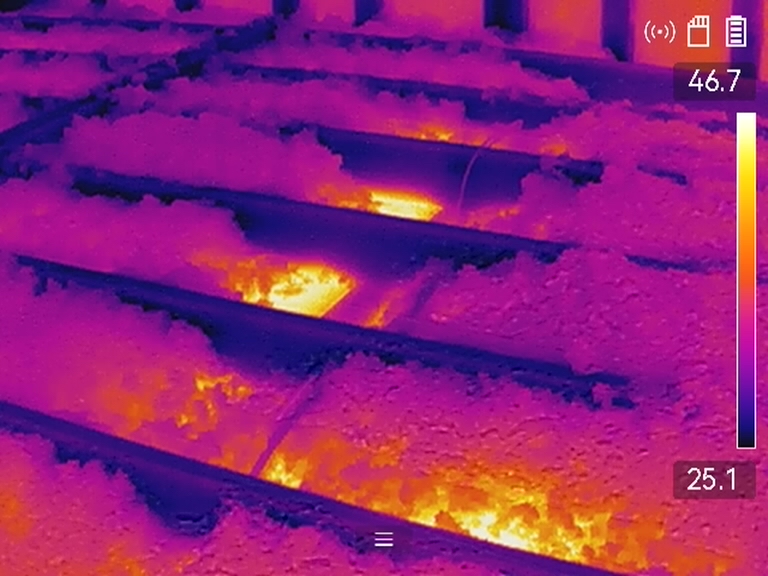
Insulation works by trapping still air. But when warm, moist air from the house leaks into the attic, that moisture can condense and freeze inside the insulation itself. Wet or frozen insulation loses much of its ability to resist heat flow. So the problem feeds itself. More heat leaks out, which melts more snow, which means more water behind the dam.
Also, take a look at the edges of your attic near the eaves. The space where the roof meets the exterior wall is called the heel of the truss, and it's almost always where insulation gets thin or compressed. That's a weak spot where heat passes through easily.
The Damage Ice Dams Can Do
This goes beyond water stains on your ceiling.
Ice weighs about 57 pounds per cubic foot. A large ice dam along a 30-foot roofline can add thousands of pounds of weight concentrated on the very edge of your roof, right on the rafter tails that were never designed to carry that kind of load. In extreme cases, overhangs can sag or collapse entirely.
When chunks of ice break free, they can shear off gutters, downspouts, and anything mounted below. A/C condensers sitting next to the house are a common casualty.
And water that backs up under the shingles doesn't just drip. It gets pushed by pressure. It finds nail holes, seams, and any tiny gap in the roof sheathing. By the time you see it inside, it's often been soaking your roof structure for days.
What Actually Works (And What Doesn't)
Skip the Band-Aids
Heating cables, those zigzag wires you see on roofs, are a symptom treatment. They melt a channel for water to drain, but they don't address why the ice is forming. They cost money to run every winter, and they often shift the dam to a slightly different location instead of eliminating it. Roof raking is another temporary fix, and it's legitimately dangerous. Falls from ladders during icy conditions are one of the most common causes of homeowner injury in winter.

Fix the Source: Air Seal First
The single most effective thing you can do is air seal the ceiling between your living space and the attic. This means getting into the attic and sealing every penetration, every gap, every bypass with caulk, spray foam, or rigid material. Pay special attention to recessed lights, plumbing vents, wire holes, duct chases, and the top plates of interior walls. This stops the warm air convection that drives the majority of ice dam formation.
This step matters more than adding insulation. You can pile insulation a foot deep, but if warm air is streaming past it through unsealed gaps, it won't solve the problem.
Then Insulate
Once the air leaks are sealed, bring your attic insulation up to current standards. For central Ohio, that means R-49 to R-60. Pay attention to the eaves, where insulation tends to thin out. Make sure there's still at least a 2-inch gap between the insulation and the underside of the roof deck so air can flow from the soffit vents upward.
Ventilate Properly
Your attic needs a way to flush out any residual heat that makes it through. The standard is 1 square foot of net free ventilation area for every 300 square feet of attic floor space. That ventilation needs to be balanced between intake at the soffits and exhaust near the ridge. A lot of homes have ridge vents that look functional from outside but have insulation pushed up against the soffit vents inside, blocking airflow completely.
The Payoff
Fixing the root cause of ice dams isn't just about preventing winter damage. Sealing air leaks and adding proper insulation typically cuts heating and cooling costs by 15 to 30 percent. Most homeowners see a full return on the investment within 3 to 5 years. And if you're selling your home, a well-insulated, properly sealed attic is a selling point that a home inspector will notice, especially in a market where buyers are paying more attention to energy efficiency and maintenance risk.
Ice dams aren't something you should just live with. They're your house telling you it's losing heat through the roof. The good news is that the fix is straightforward, the economics make sense, and once it's done right, you don't have to think about it again.
Whether you're buying or selling a home in central Ohio, what's happening in the attic matters more than most people think. Poor insulation, air leaks, and signs of ice dam damage can affect a sale from either side of the table. Well Built Inspections gives you the full picture so you can make decisions with confidence. Call 614-368-6149, email support@wellbuiltinspections.com, or visit wellbuiltinspections.com/schedule to get started.

Have questions about your Central Ohio home?
Whether you need a pre-purchase home inspection or a maintenance check, Brandon Miller is here to help.
Book Your Inspection Online